The Studebaker-Bendix Heritage Trail takes you on a path highlighting some of South Bend’s influential titans of industry. Their successful endeavors employed thousands of people and impacted the community from the factories and homes they built to the churches they funded.
Directional signage throughout the city will help you navigate the trail. Watch for signs at each site indicating your stopping location. Driving the entire trail will take approximately 90 minutes. Allow additional time for stopping at museums, etc.
Please note that some locations have limited hours & admission fees. Check online or call for more information.
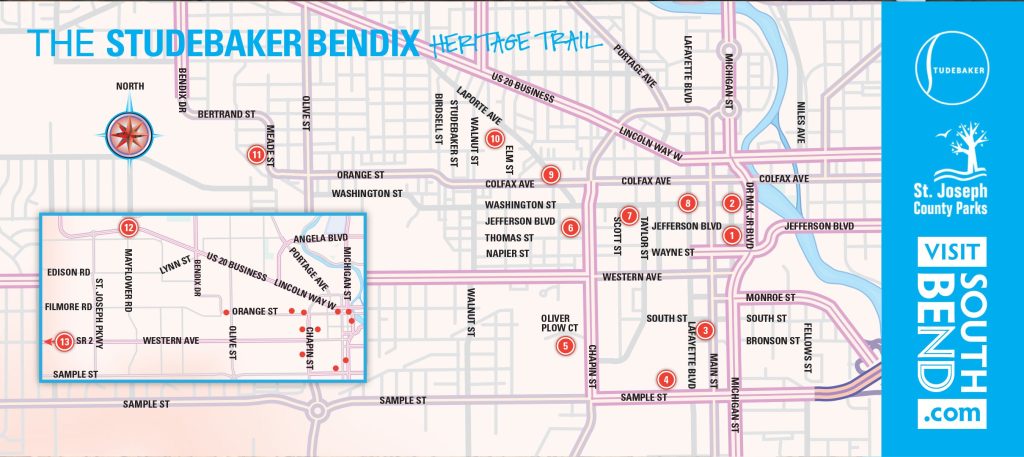
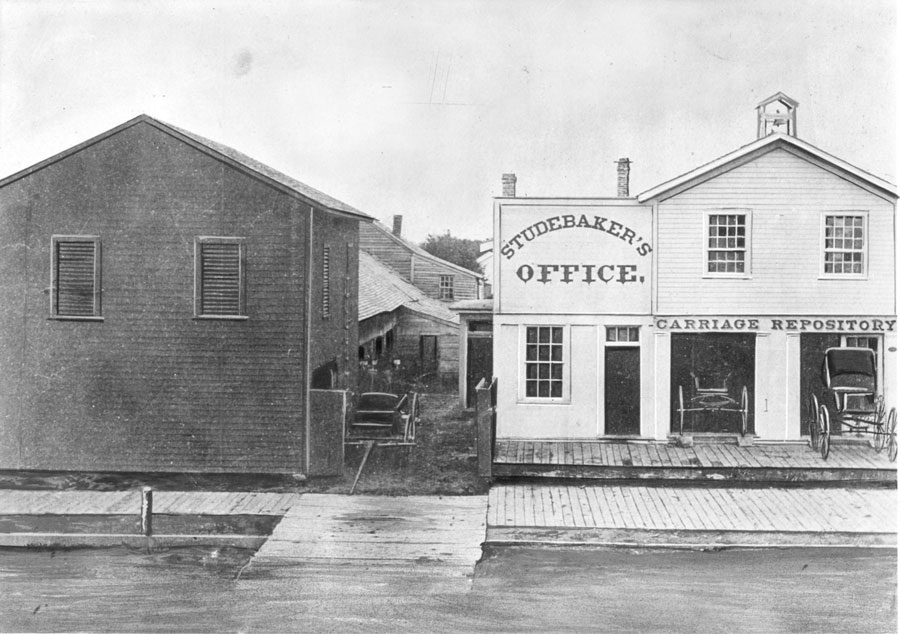
1. STUDEBAKER BLACKSMITH SHOP & CARRIAGE FACTORY SITE
CORNER OF S. MICHIGAN ST. & E. JEFFERSON BLVD.
Emigrating from Gettysburg, Pennsylvania, via Ashland, Ohio, the Studebaker brothers constructed their first blacksmith shop and carriage factory on this site in 1852. Located in the heart of South Bend’s growing business district near the St. Joseph River, the Studebakers’ business grew rapidly as a supplier of wagons during the Civil War. They remained on this site until the late 1880s. Production then moved to Studebaker’s newer plant south of downtown.
2. JMS BUILDING & HIGHWAY MARKER
108 N MAIN ST.
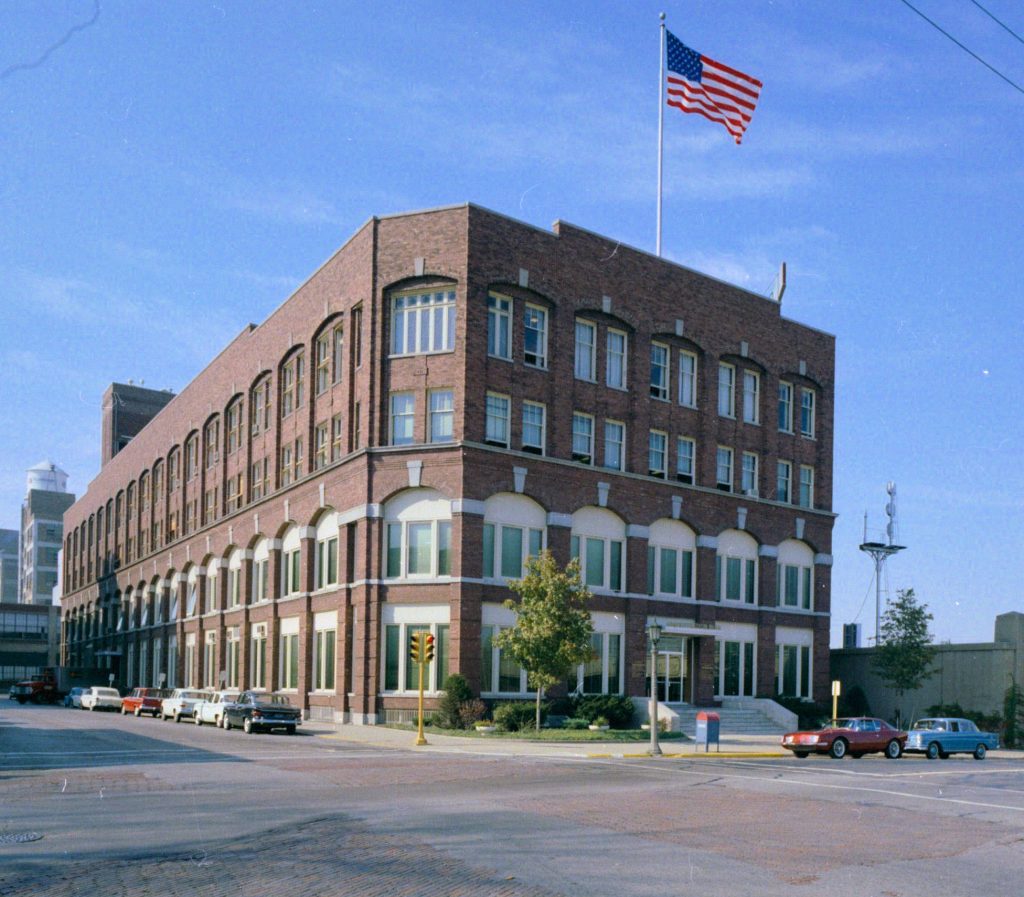
Transportation and the movement of goods played an important role in South Bend’s growth. As car traffic increased, major highways intersected here. These included Lincoln and Dixie Highways and the Michigan Road. John M. Studebaker constructed the JMS office building (pictured) in 1909. It was South Bend’s tallest building at the time of its construction and was connected to other nearby buildings by tunnels.
3. STUDEBAKER ADMINISTRATION BUILDING
635 S. MAIN ST. | National Register of Historic Places
BODY ASSEMBLY BUILDING
635 S. LAFAYETTE BLVD.
Designed by noted Chicago architect Solon Beman, Studebaker constructed this Administration Building (corner of Bronson and Main) in 1906.The company was still manufacturing carriages and
wagons but was moving into automobiles. Clad in oversize brick
resembling street pavers, the building housed engineering, sales, accounting and executive offices. It provided state of the art employee perks such as a men’s and women’s gym, bowling alley and cafeteria. The 1923 Body Assembly Building west of the Administration was designed by industrial architect Albert Kahn. It is a simple industrial design with exposed concrete structure and large windows to provide ample light for workers. Studebaker automobile bodies were built here before heading to final assembly line.
4. STUDEBAKER FACTORY SITE
SAMPLE ST
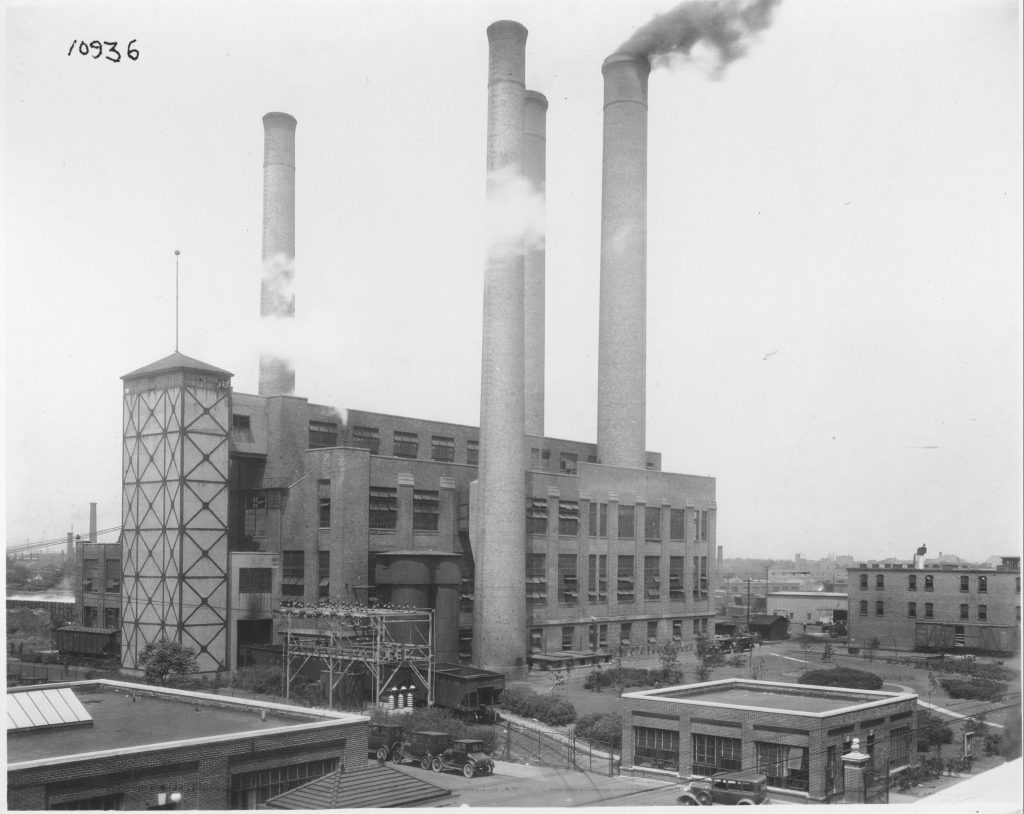
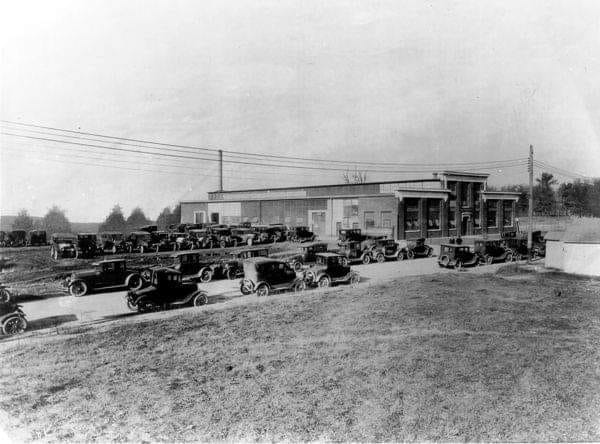
You are now standing in the middle of what grew to become the 120-acre Studebaker factory site. The central power plant, shown above, provided power and heat via tunnels to the entire complex. It sat approximately where the South Bend Police station is now. At its peak in 1950, the complex employed 24,000 workers and produced 343,000 automobiles.
5. OLIVER FACTORY SITE
918 OLIVER CT.
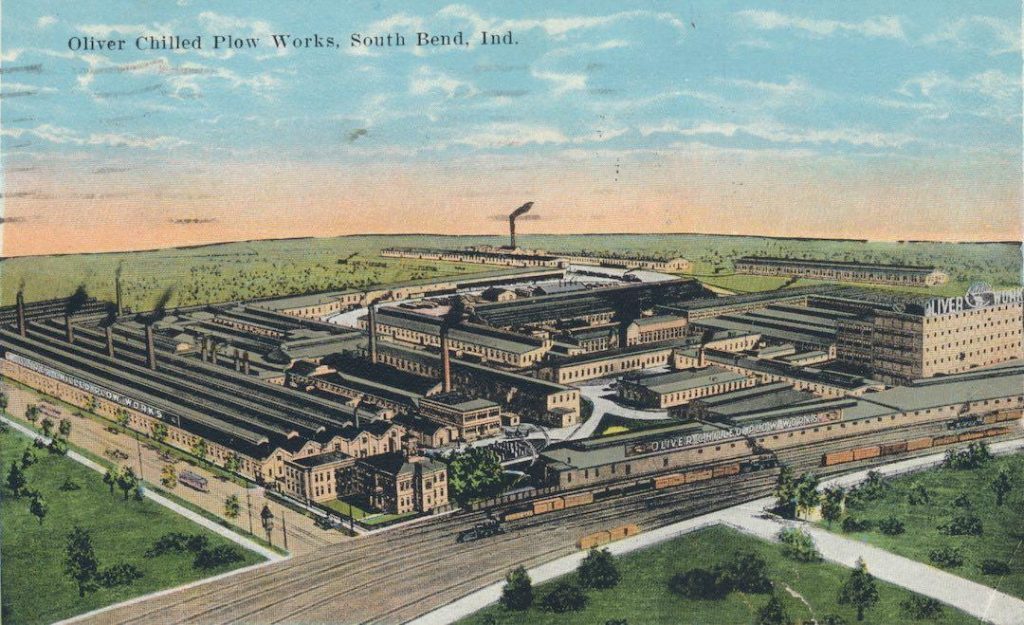
This is the former factory site for Oliver Chilled Plow Works, credited with the cultivation of the western prairie. The power plant you see provided power to the factory and J.D. Oliver’s home a few blocks north – the first home in South Bend to be electrically lit. Although not directly related to Studebaker and Bendix history, Oliver Chilled Plow is another example of a world-known industry in South Bend. See the interpretive plaques on site for more information.
6. STUDEBAKER NATIONAL MUSEUM
201 CHAPIN ST.
THE HISTORY MUSEUM
808 W. WASHINGTON ST.
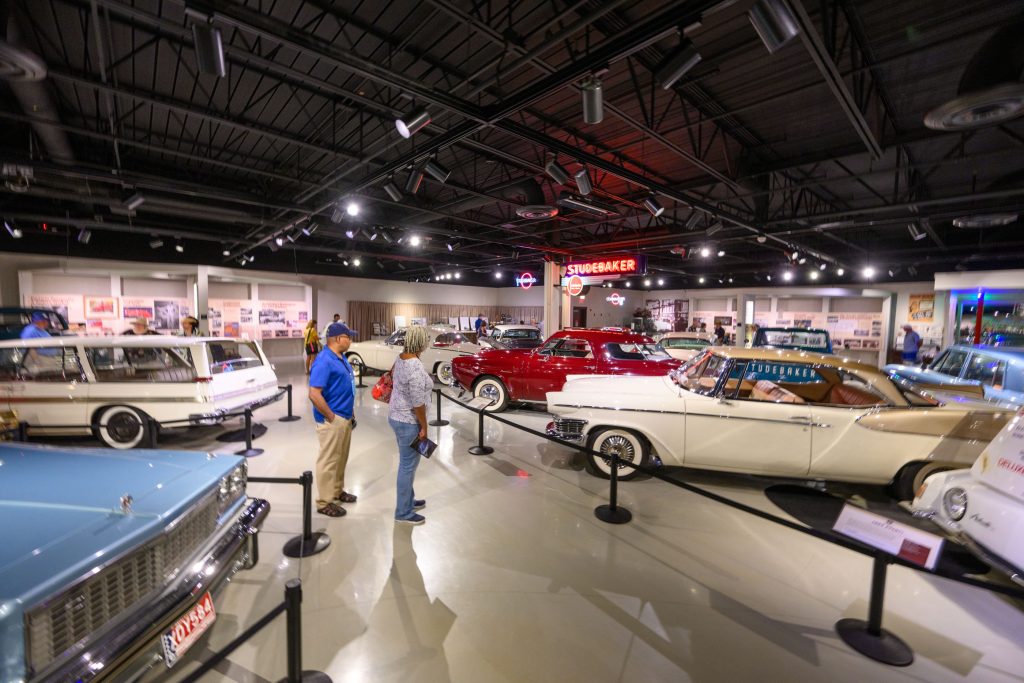
Explore the Studebaker National Museum and The History Museum. Here you’ll experience a rich collection of historic Studebaker carriages, wagons and automobiles, tour the home of J.D. Oliver and learn more about the early history of South Bend and St. Joseph County.
7. TIPPECANOE PLACE
620 W. WASHINGTON ST. | National Historic Landmark
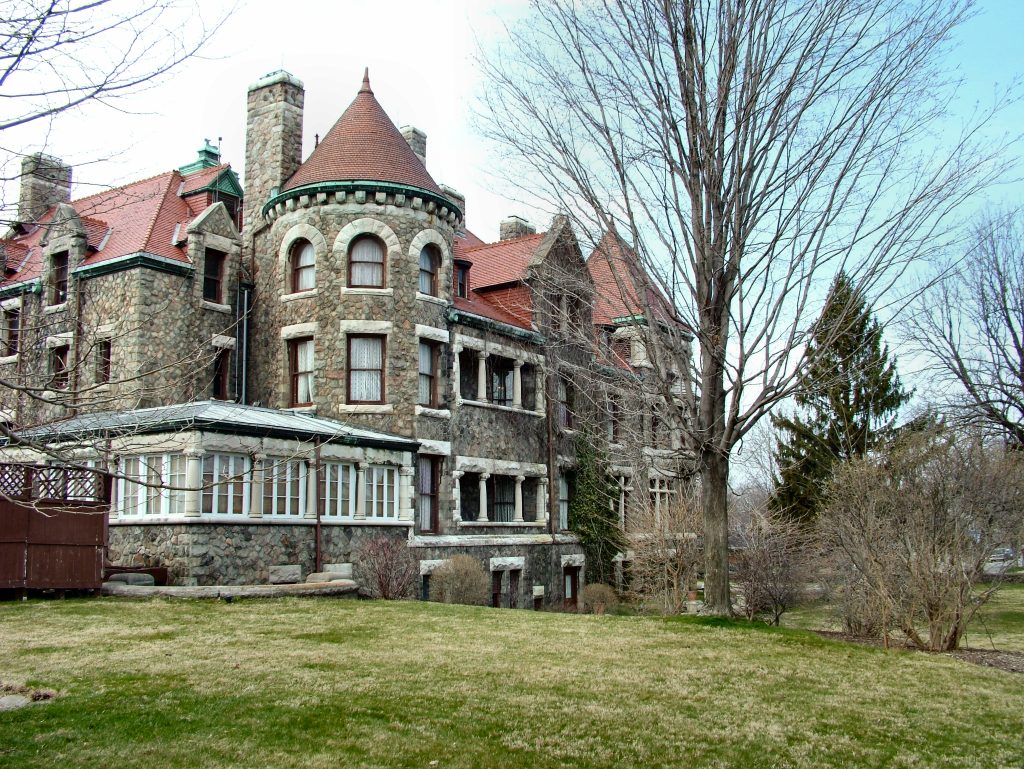
The West Washington neighborhood was home to many of South Bend’s successful businessmen. Here successful businessmen. Here Clem Studebaker constructed his family home, Tippecanoe Place, designed by Chicago architect Henry Cobbs. Completed in 1889 in the Richardson Romanesque style, it completely burned and was rebuilt a year later. At one time it had a matching carriage house. It was destroyed by fire in the 1960s.
8. FORMER FIRST PRESBYTERIAN CHURCH
302 W. WASHINGTON ST. | National Register of Historic Places
SAINT JAMES EPISCOPAL CHURCH
117 N. LAFAYETTE BLVD. | 574.232.4837
stjamessouthbend.org
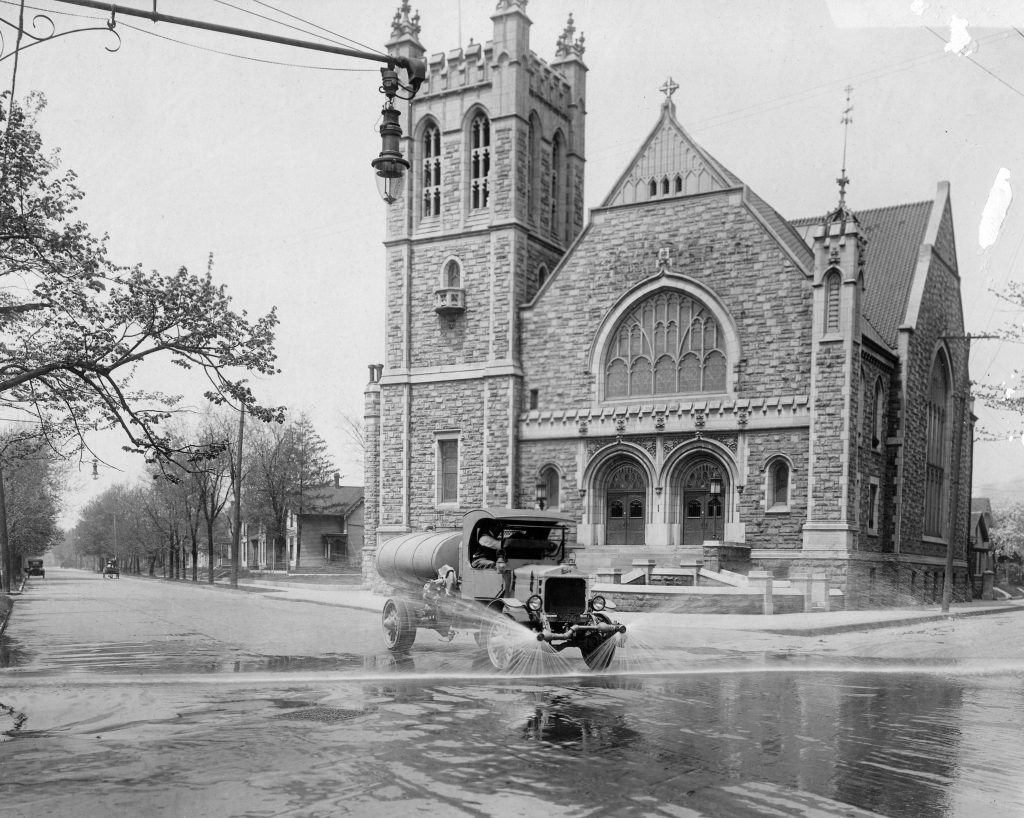
In addition to constructing factories, family homes and buildings for other commercial ventures, the Studebakers funded parks, hospitals and churches. John M. Studebaker donated funds to help construct
the Romanesque style former First Presbyterian Church with its massive stone walls and tower. Saint James is a simplified gothic
with red brick, partially funded by Peter Studebaker.
9. ST. PAUL’S MEMORIAL METHODIST CHURCH
1001 W. COLFAX AVE.
Clem Studebaker funded the construction of St. Paul’s in a Gothic style of cut limestone. Today it’s part of the W. Washington National Historic District.
10. CITY CEMETERY
214 ELM ST. | 574-235-9458 | SBVA.ORG | National register of Historic Places
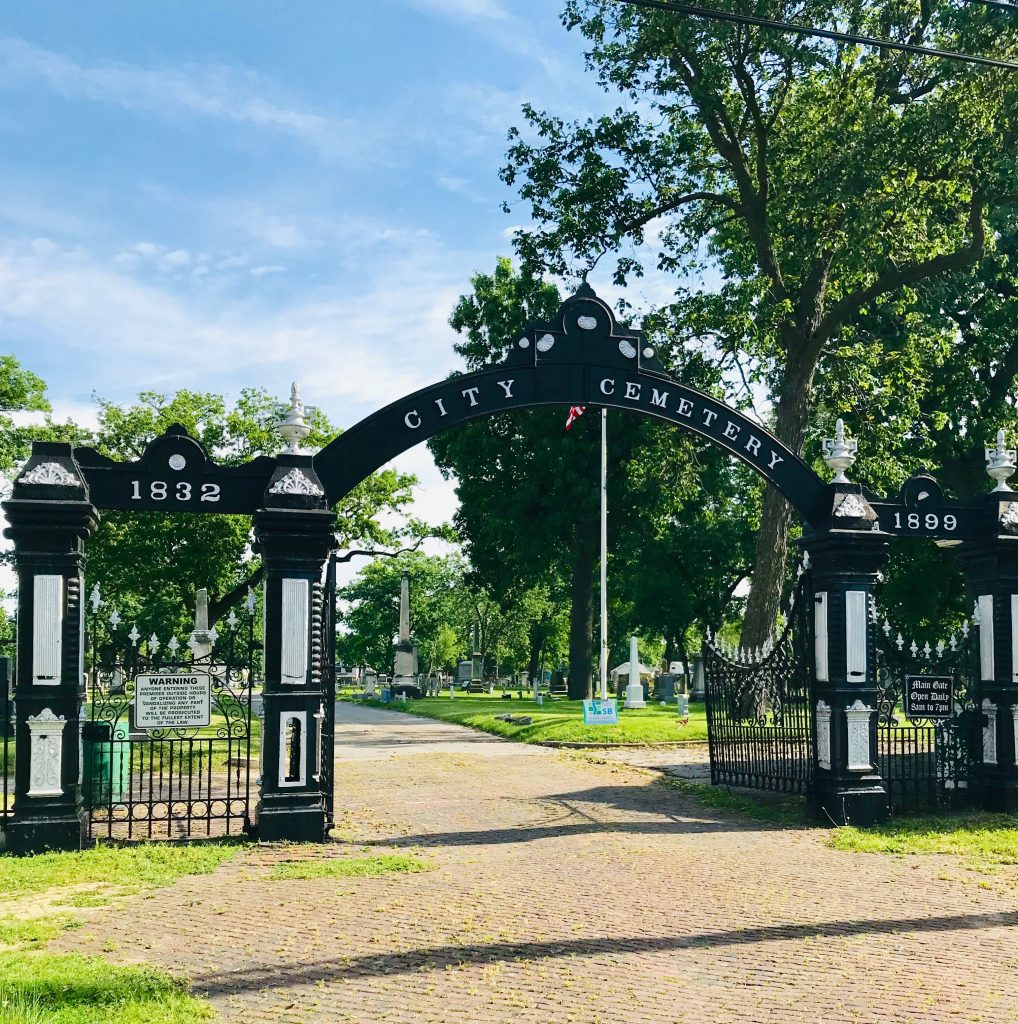
Established in 1832, City Cemetery is the oldest formal cemetery in South Bend. Here you can see the final resting place for many notable South Bend families, including several of the Studebaker family and former vice president Schuyler Colfax. Look for the original mausoleum for Peter Studebaker and the obelisk where he is buried. Stop by the Sexton’s Office for a map with the cemetery’s history and burial sites. Be sure to check out the location of the failed Kankakee Mill Race and its remaining stone bridge.
11. BENDIX CORPORATION HEADQUARTERS
401 N. BENDIX DR.
Vincent Bendix in 1923 started Bendix Corporation, growing the company into a worldwide producer of automotive and airplane brakes, carburetors and starting drives. Bendix Aviation launched in 1929. Here Bendix constructed the first office and factory. Bendix in 1971 introduced the first anti-lock braking system for automobiles. It was eventually purchased and merged with Allied Signal and later with Honeywell and Bosch.
12. BENDIX FIELD | SOUTH BEND INTERNATIONAL AIRPORT
4477 PROGRESS DRIVE
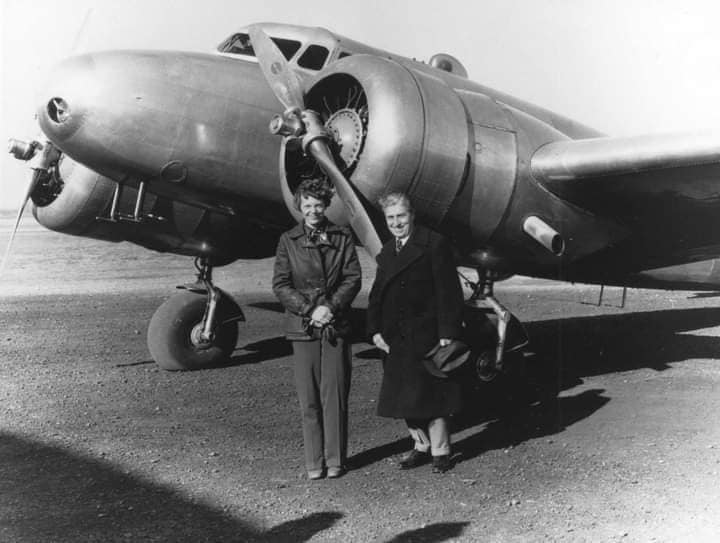
Park in the short-term lot and visit the displays upstairs in the terminal at the South Bend International Airport, where you’ll learn more about South Bend’s link to early aviation history. Vincent Bendix started constructing the airport in 1929. Several notable early aviators visited, including Amelia Earhart. Bendix started the Bendix Trophy — a transcontinental U.S. race from Los Angeles to Cleveland — to encourage the development of efficient aircraft for commercial aviation. The race continued annually from 1931 to 1962. The first race was won at a speed of 223 miles per hour.
13. BENDIX WOODS COUNTY PARK
56960 TIMOTHY ROAD, NEW CARLISLE | 574-654-3155 | SJCPARKS.ORG | NATIONAL REGISTER OF HISTORIC PLACES
The current site of Bendix Woods County Park was first developed by Studebaker Corp. as its automotive proving grounds. It featured a clubhouse built in 1926 (today park offices at the east end of the park), a test track and a road course. Studebaker planted 8,000 pine trees to spell the company’s name as a salute to the aviation industry. The half-mile sign is still visible from the air today. When Studebaker closed, Bendix acquired the property and donated a portion in 1966 to the newly formed county park board. Navistar not International currently uses part of the original proving grounds.
Text and tour developed in collaboration by Visit South Bend Mishawaka, the Historic Preservation Commission of South Bend, Indiana Landmarks, St. Joseph County Parks, Studebaker National Museum and The History Museum.